What Are Thyroid Nodules?
Thyroid nodules are small lumps that form in the thyroid gland. The thyroid sits at the front of your neck. Most nodules are not cancerous. However, some can cause health problems. For example, they may affect how your thyroid works. Sometimes, they may grow or feel uncomfortable. According to the World Health Organization (WHO), thyroid nodules are common, especially in adults. But not all nodules need treatment. Still, it is important to check them with safe imaging for thyroid lumps.
What Is Ultrasonography (USG)?
Ultrasonography, or USG, is a safe imaging test. It uses sound waves to create pictures of the inside of your body. Doctors often call it an ultrasound. USG does not use radiation. Because of this, it is safe for most people. In fact, it is often used to look at the thyroid gland. The thyroid ultrasound procedure helps doctors see the size, shape, and features of thyroid nodules.
Why Is USG Used for Thyroid Nodules?
USG is the main test for checking thyroid nodules. It helps doctors in many ways. For instance, it can:
Because USG is quick and painless, it is the first choice for thyroid nodule diagnosis.
How Is a Thyroid USG Performed?
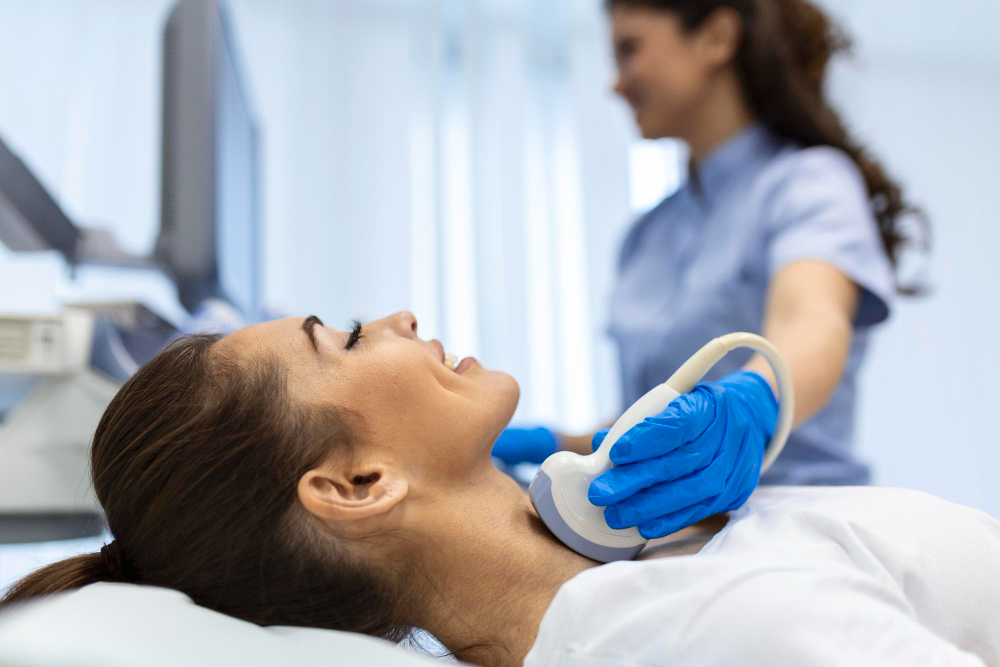
During a thyroid ultrasound procedure, you will lie on your back. Usually, a pillow is placed under your shoulders. This helps your neck stretch gently. The doctor or technician puts a small amount of gel on your neck. Then, they move a handheld device, called a transducer, over the skin. The transducer sends sound waves into your neck. These waves bounce back and create images on a screen. The whole process takes about 15 to 30 minutes. There is no pain, and you can go home right after.
What to Expect During the Procedure
Before the test, you do not need special preparation. You can eat and drink as usual. However, you may be asked to remove jewelry from your neck. During the test:
After the test, the gel is wiped off. You can return to your normal activities right away. If you searched for “thyroid ultrasound near me,” most clinics offer this simple test.
Understanding USG Results
After the USG, a doctor reviews the images. They look for features such as:
These details help decide if the nodule is likely harmless or needs more tests. Sometimes, a biopsy is suggested. This means taking a small sample for further study. The doctor will explain what your results mean and the next steps.
Benefits and Limitations of USG
USG offers many benefits for thyroid nodule diagnosis:
However, there are some limitations:
Still, USG remains the best first step for safe imaging for thyroid lumps.
When to Consult a Doctor
If you notice a lump in your neck, see a doctor. Also, if you have trouble swallowing, changes in your voice, or swelling, seek help. Even if your thyroid nodule was found by chance, it is wise to get it checked. Early diagnosis can help prevent problems. The Centers for Disease Control and Prevention (CDC) recommends regular check-ups for thyroid health.
In summary, ultrasonography for thyroid nodules is a safe and helpful test. It guides doctors in diagnosis and treatment. For any concerns about thyroid nodules or USG, consult a healthcare specialist for personalized advice.