
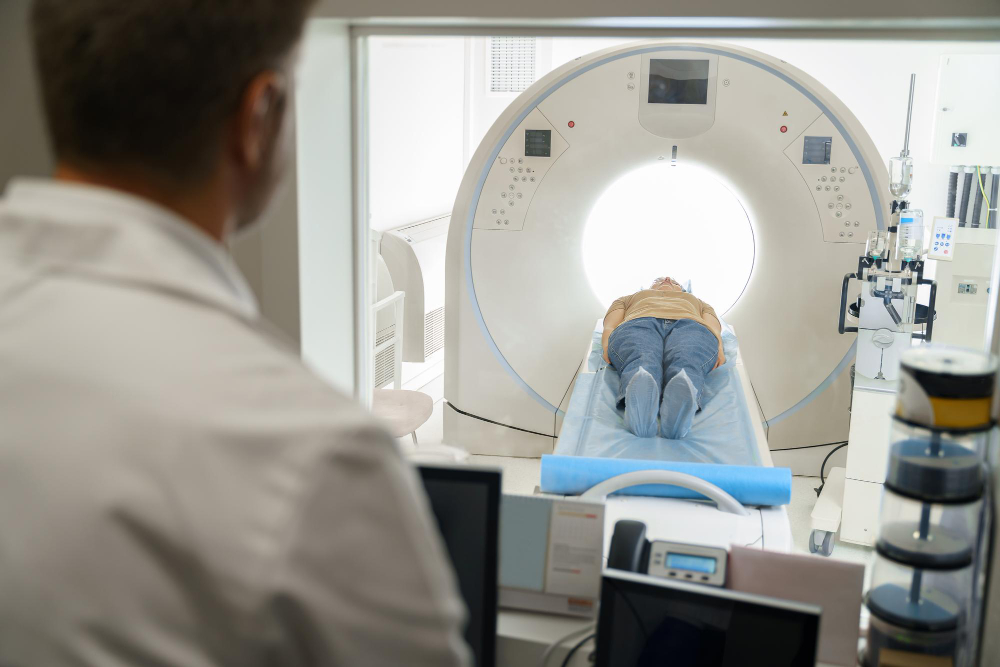
What is an MRI Brain?
An MRI Brain is a special type of brain scan. It uses strong magnets and radio waves to create clear images of your brain. Unlike X-rays or CT scans, an MRI Brain does not use radiation. Instead, it helps doctors see detailed pictures of brain tissues. Because of this, MRI Brain scans are often used to check for problems inside the brain.
Why is an MRI Brain Performed?
Doctors may suggest an MRI Brain for many reasons. For example, it can help find the cause of headaches, seizures, or dizziness. Sometimes, it is used to check for tumors, strokes, or infections. In addition, MRI Brain scans can show changes from injuries or diseases like multiple sclerosis. Overall, this brain imaging test helps doctors make better decisions about your health.
How to Prepare for an MRI Brain
Before your MRI Brain scan, your doctor will give you instructions. Usually, you can eat and drink as normal. However, you should tell your doctor if you have metal in your body, such as a pacemaker, metal implants, or dental work. Because the MRI uses magnets, metal objects can be a problem. Also, remove jewelry, hairpins, and watches before the scan. If you feel nervous in small spaces, let your doctor know. Sometimes, medicine can help you relax during the MRI procedure.
What Happens During the MRI Brain Procedure?
First, you will change into a hospital gown. Next, you will lie on a table that slides into the MRI machine. The machine looks like a large tube. During the scan, you must stay very still. This helps create clear images. The MRI machine makes loud tapping or thumping sounds. For this reason, you may get earplugs or headphones. Sometimes, a special dye called contrast is used. It is given through a small needle in your arm. This dye helps show certain areas of the brain more clearly. The whole MRI procedure usually takes 30 to 60 minutes. After the scan, you can go home and return to your normal activities.
Safety and Risks of MRI Brain
For most people, an MRI Brain is very safe. Because it does not use radiation, there is no risk from X-rays. However, the strong magnets can affect metal implants or devices. Therefore, always tell your doctor about any metal in your body. Some people may feel anxious inside the MRI machine. If you have kidney problems, let your doctor know before getting contrast dye. Rarely, people may have an allergic reaction to the dye. According to the World Health Organization (WHO), MRI scans are safe for most patients.
Interpreting MRI Brain Results
After your MRI Brain scan, a radiologist will look at the images. The radiologist is a doctor who specializes in reading scans. They will write a report for your healthcare provider. Your doctor will then explain the results to you. Sometimes, the results are normal. Other times, the scan may show changes that need more tests or treatment. If you have questions, ask your doctor to explain the findings in simple terms.
Frequently Asked Questions about MRI Brain
Conclusion
In summary, an MRI Brain is a safe and helpful way to look inside your brain. It helps doctors find and treat many health problems. If you have concerns or need more information, consult a radiologist or healthcare provider for personalized advice about MRI Brain scans.